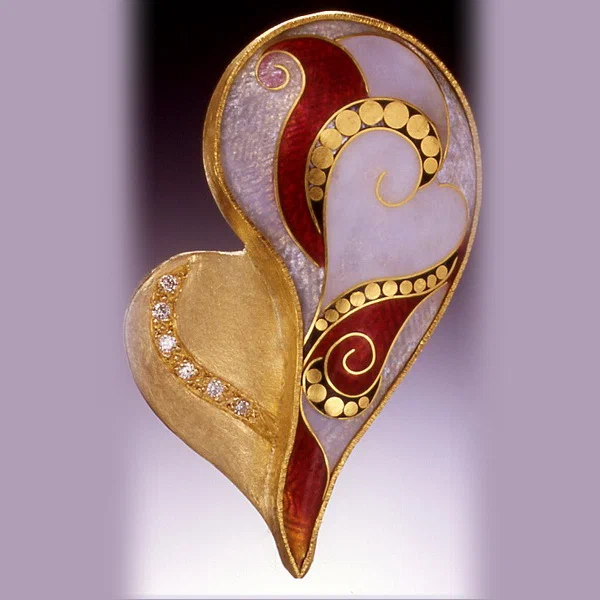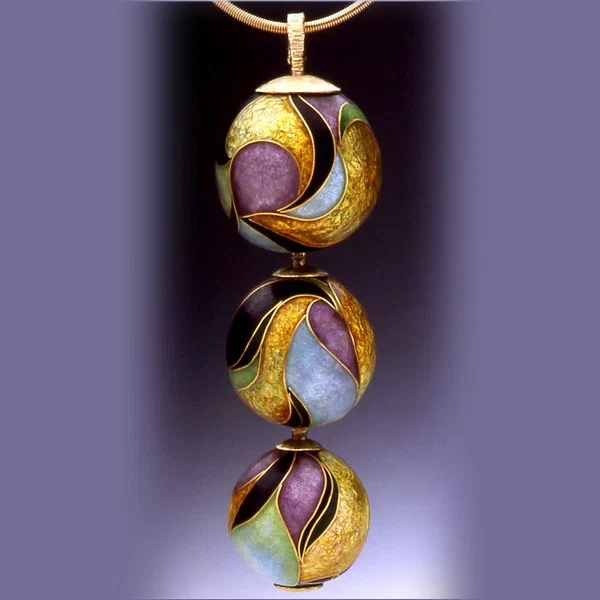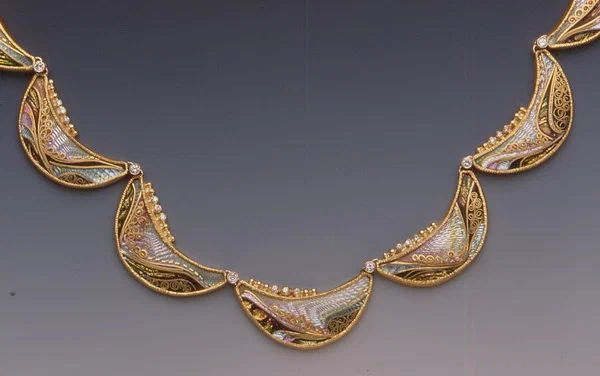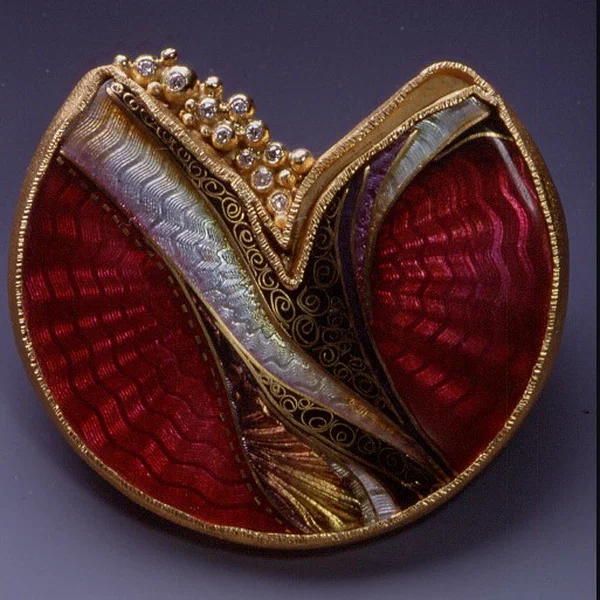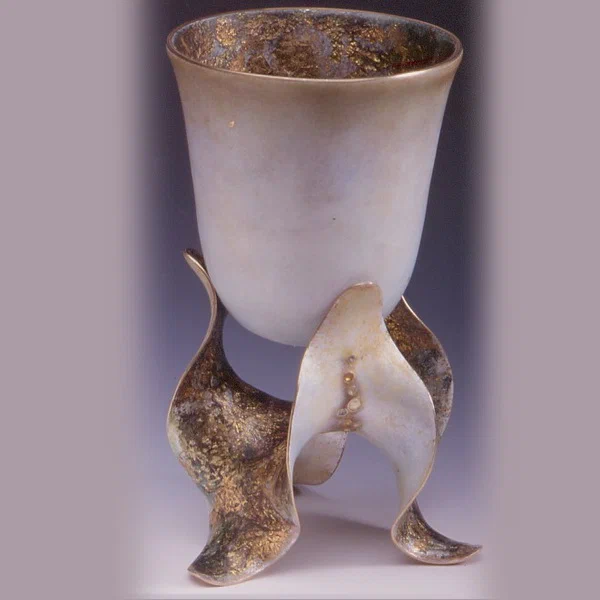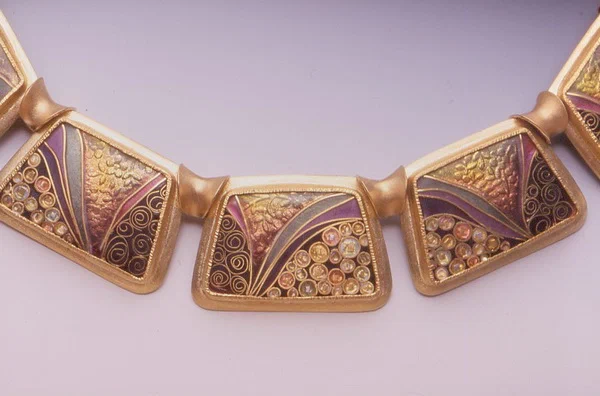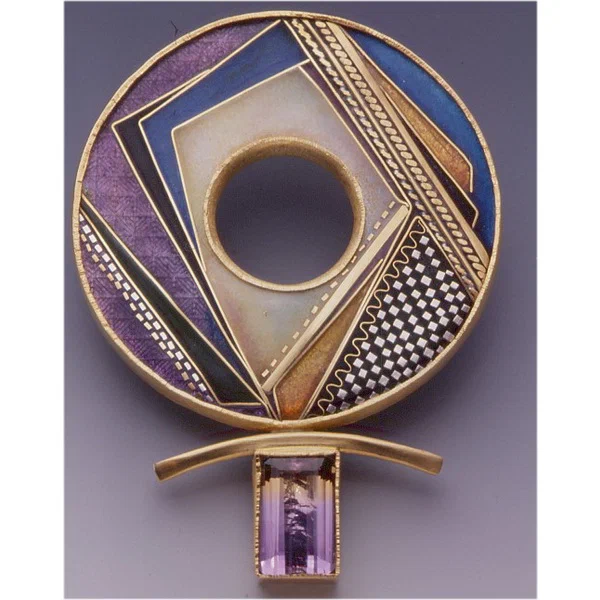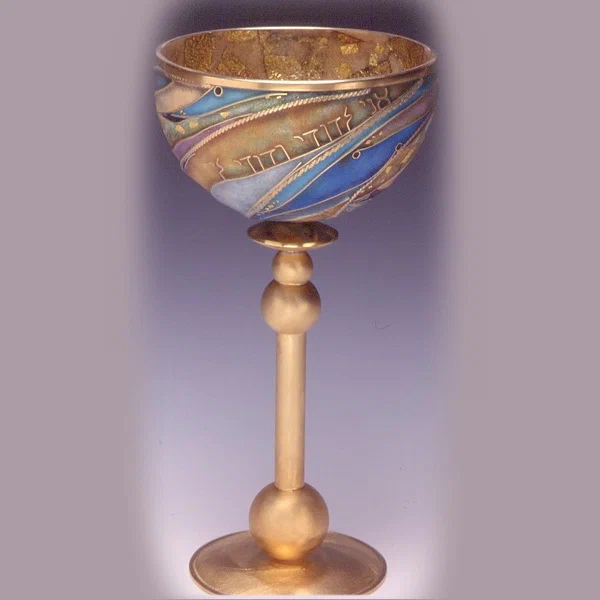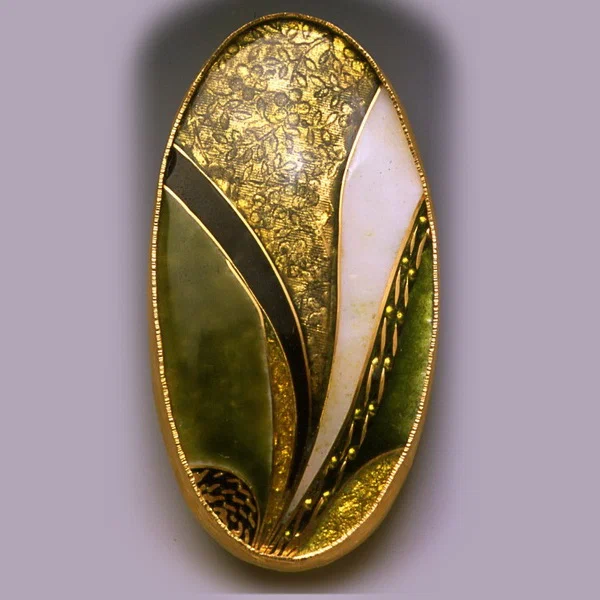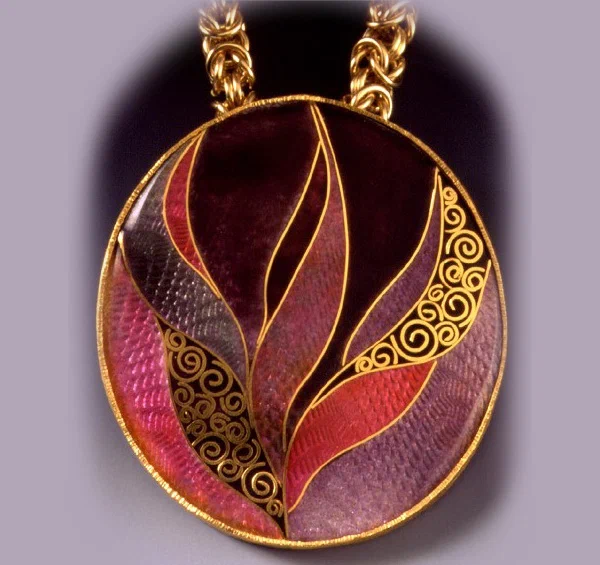
Marilyn Drouin (1941–2001), a renowned American enamelist hailing from Newark in Maryland, completed her studies at William Paterson University in New Jersey. However, she acquired the craft of enameling by learning directly from experienced artisans specializing in metalwork and enamel techniques. During the early 1900s, she established her own enterprise. Her creations have been displayed in museums and galleries globally. Since 1985, Marilyn has served as an art instructor at the Newark Museum’s Art School. Her daughter, Erika Drouin, now carries on the family business.
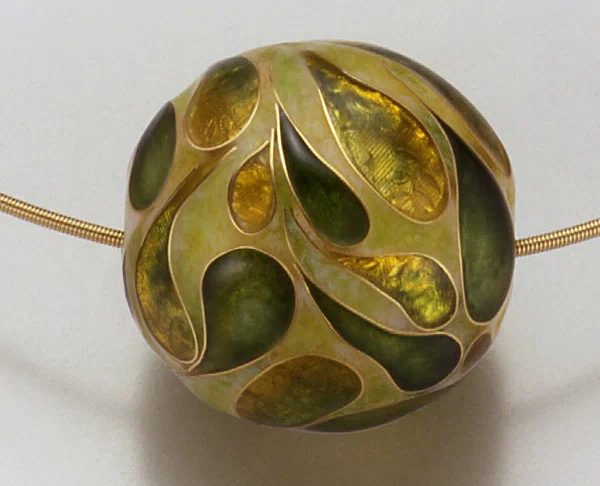
Erika Drouin perpetuates the enameling legacy initiated by her mother, Marilyn. Regarding her artistic practice, Erika explains:
“Vitreous enamel consists of high-quality glass pulverized into powder and tinted with metal oxides. This material is bonded to a metal substrate through firing in an oven at approximately 800°C. In my creations, I fuse the enamel onto pure silver or 24-karat gold. Typically, a piece undergoes between six and seventy firings, with fresh layers of enamel applied after each cycle. This process ensures the enduring richness and depth of color characteristic of enamel art.
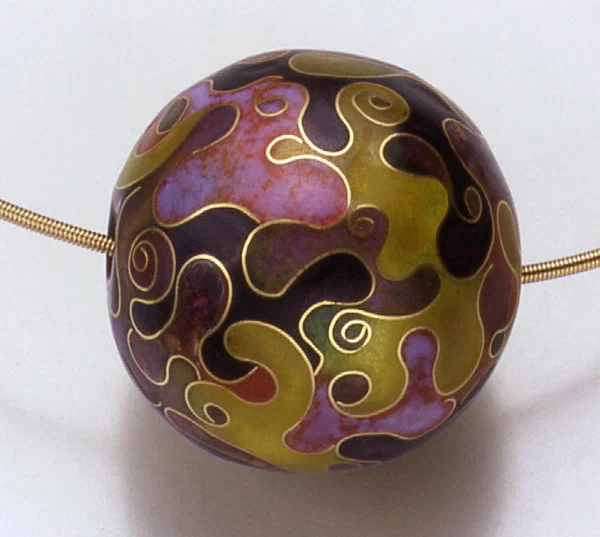
I exclusively employ the Cloisonné technique in all my works. This method involves creating designs by separating glass colors into compartments defined by thin 24-karat gold wires.

Another technique featured in my work is Basse-taille. In this style, the base metal surface is manipulated to produce a textured background. Texture may be achieved via traditional engraving, machine turning, stamping, forging, embossing, or fine etching. Subsequently, the metal is coated with layers of translucent enamel. The underlying textures generate deep reflections and shifts in color tone depending on the lighting conditions. My enamels are mounted in bespoke gold settings.”